7 Reasons Most Nail Fungus Treatments Fail Adults Over 50 — And What Actually Works
Most OTC and prescription treatments only have an 18% cure rate. New research found why — and what is the best nail fungus treatment after this discovery.

Most OTC and prescription treatments only have an 18% cure rate. New research found why — and what is the best nail fungus treatment after this discovery.
Out of every 100 adults who try to treat nail fungus, 80+ walk away with the same yellow nail they started with. Drugstore creams. Prescription drops. Pills. Folk remedies. Most have already cycled through two or three before they stop trying.
A September 2025 study finally identified why — and it's not strength. The fungus has a defense mechanism almost no treatment was designed to break through. Below are 7 things this changes.
THE DELIVERY PROBLEM
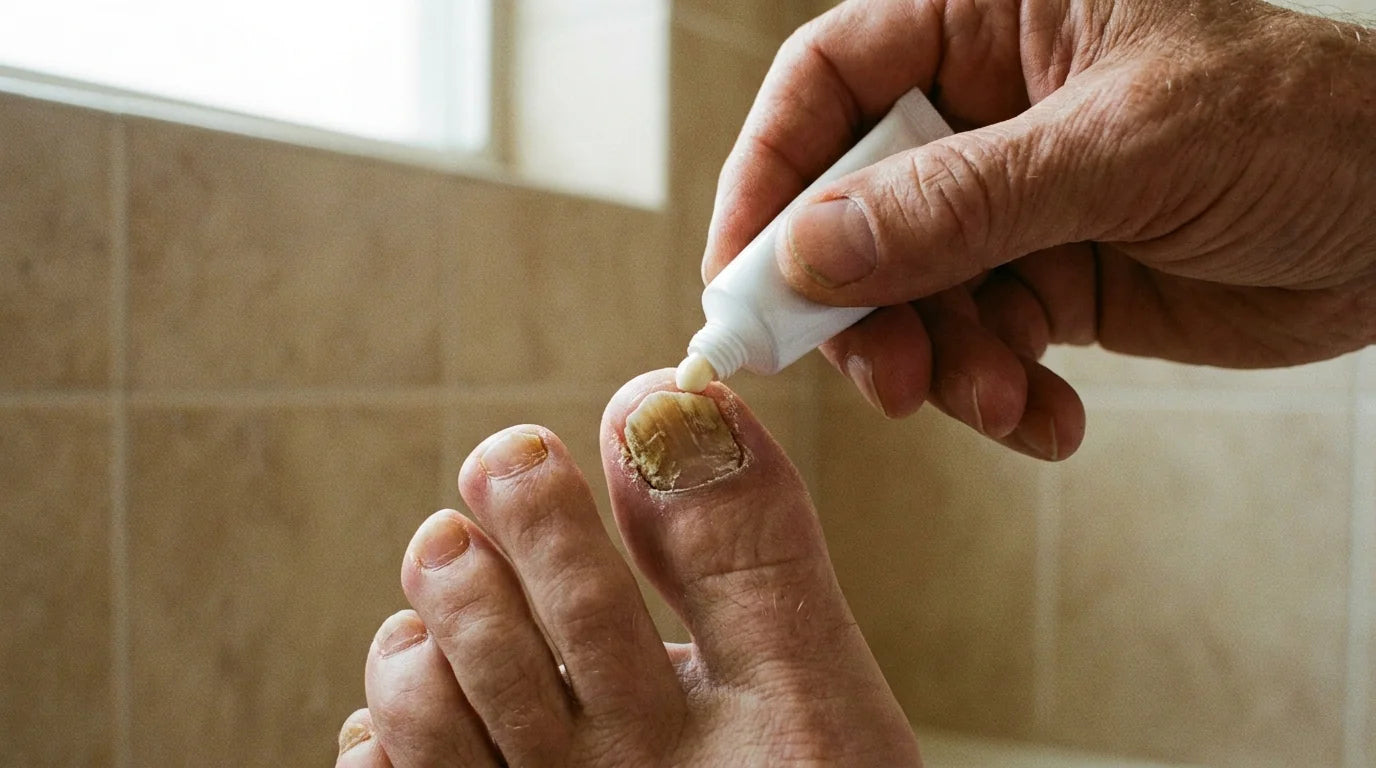
The drugstore creams, the prescription drops, the natural oils — their formulas couldn't get past the nail plate. You see a little improvement at first: the yellow lightens, the texture smooths. Then it stalls. The yellow comes back.
Because the fungus grows in the deep layers underneath. These formulations would clear what was visible on top and leave the colony beneath untouched. The treatments weren't weak — they didn't have a delivery built for the depth they had to reach. And until very recently, no one had identified what specifically was blocking it.
Patricia, 64I've tried most of the over the counter products. They show some improvement at first, but it always comes back. My nails today look worse than they did two years ago.
THE 2025 DISCOVERY
Until recently, the prevailing explanation was simply that nail fungus was hard to treat. Researchers couldn't explain why even prescription-strength antifungals were clearing the infection in fewer than 1 in 5 cases.
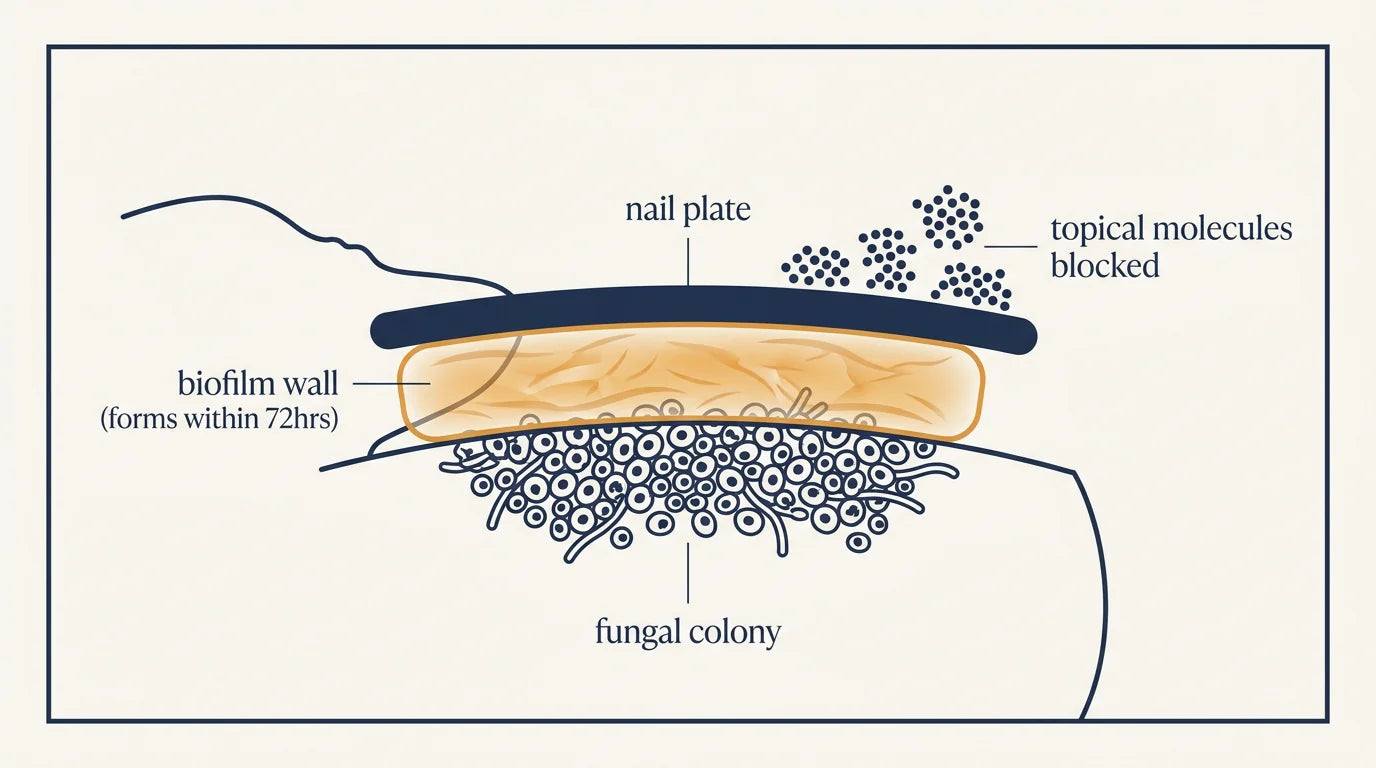
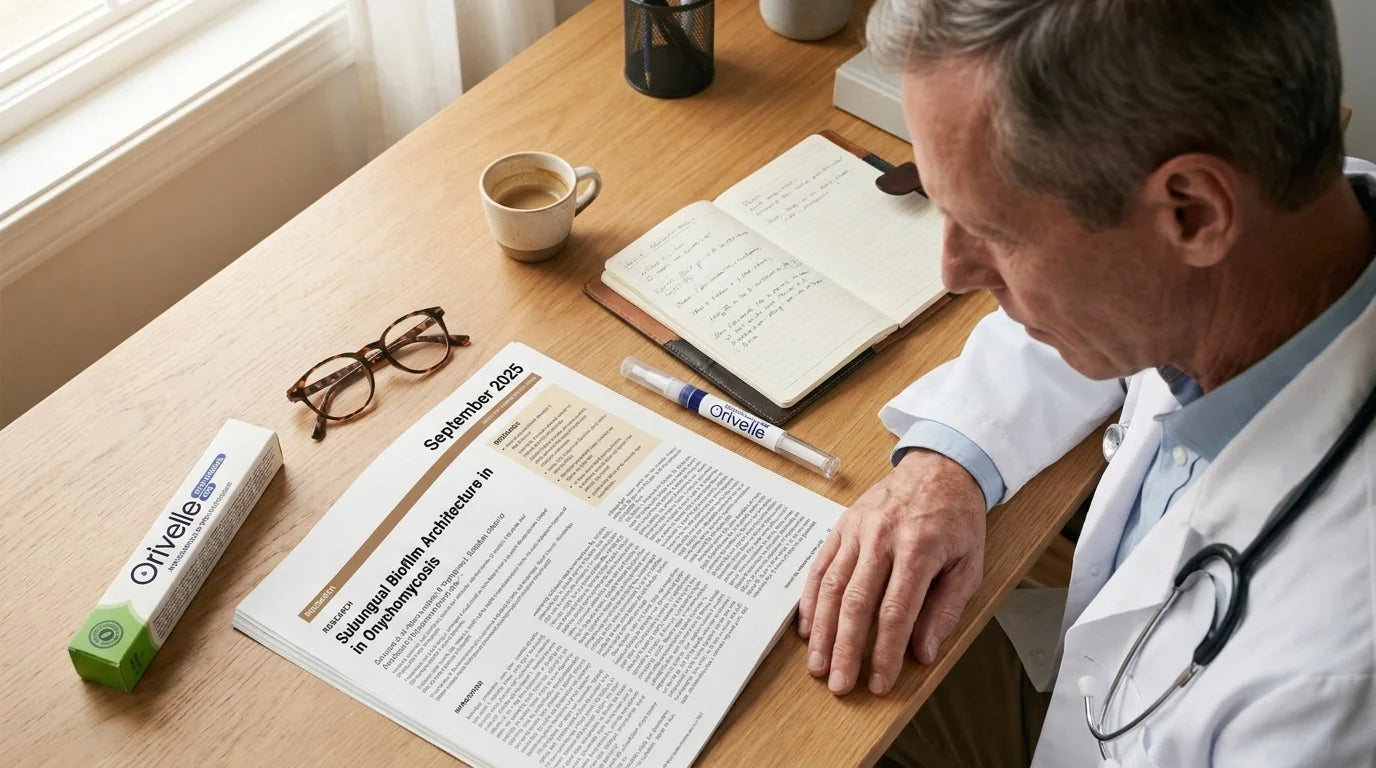
In September 2025, a paper in PLOS One identified the variable. Within 72 hours of colonizing the nail bed, fungal colonies secrete a matrix of sugars, proteins, and fungal DNA that encases them in a protective wall — a biofilm. It's not a metaphor. It's a measurable physical structure, and it blocks 90%+ of topical treatments from ever reaching the colony underneath.
THE EVIDENCE
The biofilm explains the data across the entire category. Folk remedies effectively don't reach the colony at all. OTC and prescription topicals cluster at 5–18%. Laser has no FDA clearance for eradication. The whole topical category is built for a layer the fungus doesn't live in.
| Treatment | Cure rate | Relationship to the wall |
|---|---|---|
| Vinegar / Vicks / DIY soaks | Anecdotal — no clinical data | Folk remedy; never reaches the colony |
| Kerasal | ~27% (cosmetic only) | Cosmetic softener — no antifungal action |
| Antifungal nail polish (Dr. Remedy, Trim, etc.) | No clinical efficacy data | Polish layer seals on top — never penetrates |
| Fungi-Nail (25% undecylenic acid) | ~8–18% surface improvement | Acid stays on the surface |
| Ciclopirox / Penlac (Rx) | 5.5–8.5% | Poor penetration |
| Jublia / efinaconazole (Rx) | 15.2–17.8% | Poor penetration |
| Laser therapy ($500–$1,500/session) | No FDA clearance for eradication | Not topical or systemic; results vary |
NANO-EMULSIFICATION
Once researchers named the biofilm, the question became what could actually penetrate it. A 2024 paper in Frontiers in Microbiology answered that. Conventional antifungal molecules — the active ingredients in every drugstore and prescription formula on the market — are physically too large. They sit on the wall the way water beads on glass.
What works is nano-emulsification: reducing the active compound to a particle size small enough to disrupt the biofilm matrix from inside instead of accumulating on top. The compound itself isn't new. The delivery size is. It's the first mechanism with a structural reason to work — and the few formulations using it are the ones long-haulers are now finding actually work.
DR. MYERS' FORMULA
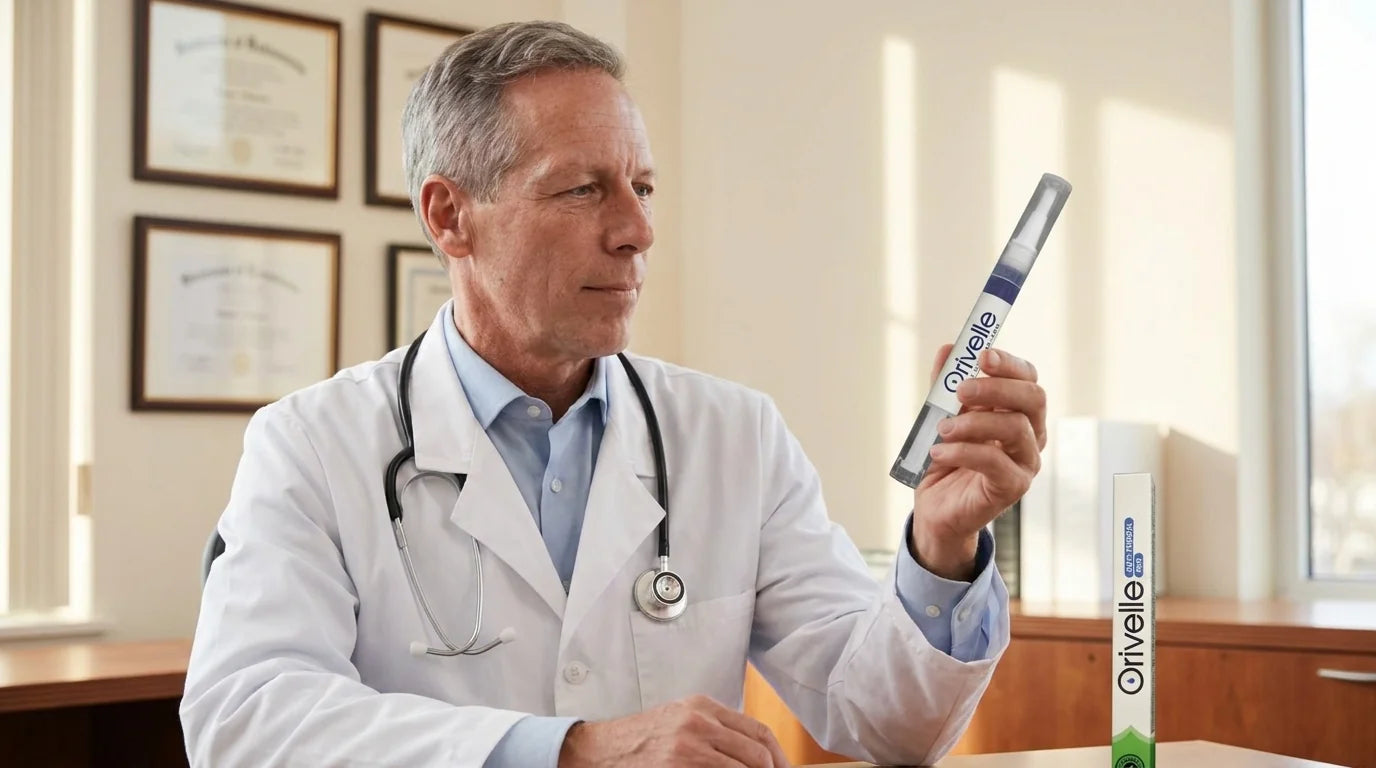
Dr. Alan Myers spent 25 years treating onychomycosis (the clinical name for toenail fungus) in his practice. He'd seen the same pattern thousands of times: patients showing up with the same yellow nail after 6 months of Jublia, 2 years of Kerasal, multiple rounds of oral antifungals — none of it changing the nail.
When the September 2025 PLOS One paper named the biofilm wall, the field finally had a name for what had been blocking topical antifungals all along. Dr. Myers worked with a compound pharmacist to build a formulation specifically for it: nano-emulsified delivery sized to disrupt the matrix from inside, 17 plant-derived botanicals working in parallel, no synthetic acids that strip the skin's pH mantle, applied via a precision pen designed for the perionychial groove.
He started applying it on his own patients — long-haulers who'd already cycled through Jublia, Kerasal, oral courses, the whole rotation. What started coming back from those patients looked nothing like what he'd been seeing for the previous 25 years:
Carol · 61 · Columbus, OHSix years of trying things. Kerasal. Fungi-Nail. Apple cider vinegar soaks. Two Jublia prescriptions. None of it changed the nail. Five days into Dr. Myers' formulation, the skin at the nail border finally looked different. By month two I booked a pedicure for the first time in seven years.
“Less than two weeks on Dr. Myers' formula and my wife noticed before I did. She said 'your toes look different' — and she didn't even know I was trying anything new.”
— David · 52 · Phoenix

AS ORIVELLE
Hundreds of long-haulers came through his practice having tried every drugstore cream, every Rx drop, every folk remedy. On his own formulation, the pattern held across nearly every patient: visible signal within 5–7 days, the nail itself looking different inside the first month, and no return of the same infection in the patients he followed up with. After a year of watching his formula work, Dr. Myers decided he had a responsibility to help more people than just the ones who could get into his practice.
He took it to market under the brand name Orivelle. The 17-botanical precision pen still leads with nano-processed tea tree oil — the delivery mechanism documented in Frontiers in Microbiology to disrupt biofilm structure rather than sit on top of it. Still no synthetic acids. Still applied via the precision pen designed for the perionychial groove. Over 200,000 customers · 4.7-star average across verified reviews since launch.
BUILT BEFORE THE DISCOVERY
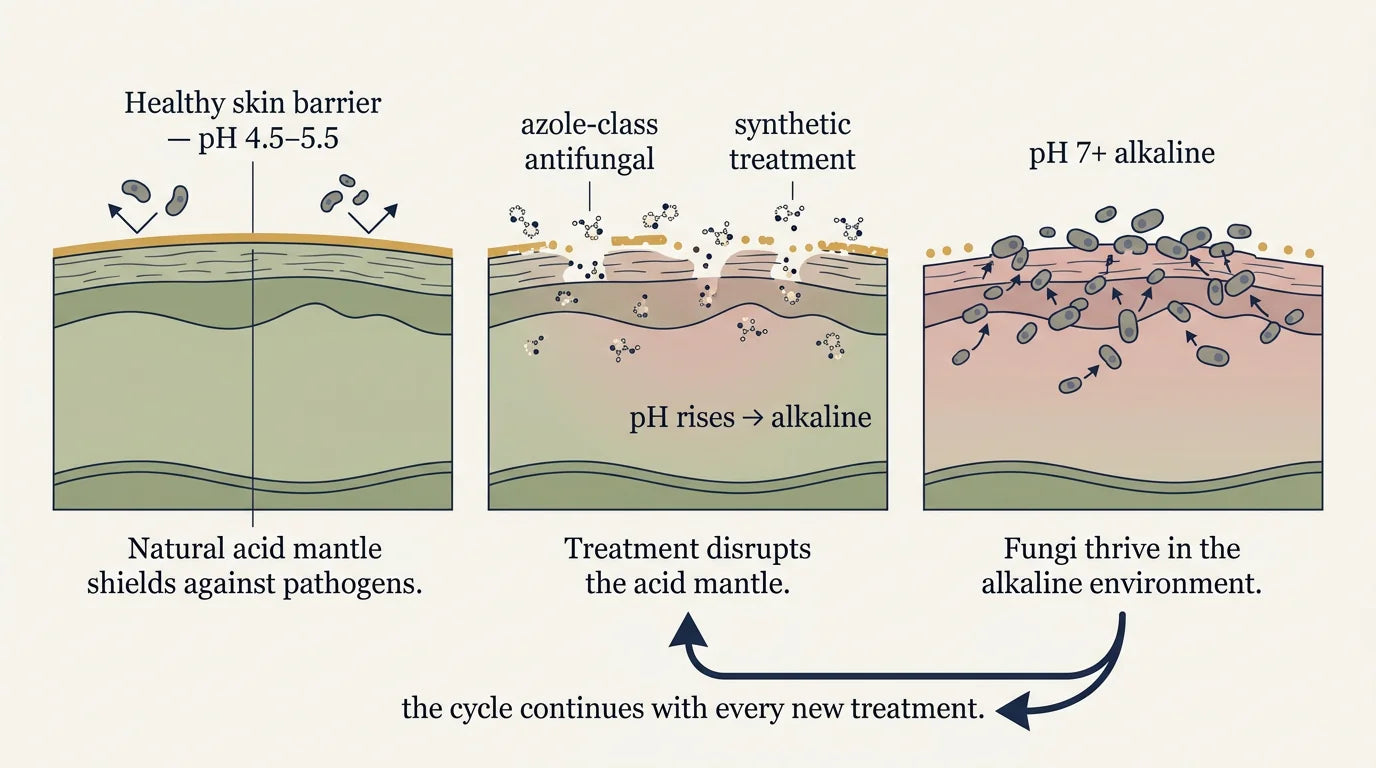
Every other nail fungus treatment on the market was developed before September 2025 — before researchers identified the biofilm. Drugstore options like Kerasal, Fungi-Nail, and Funginix. Prescription topicals like Jublia, Penlac, and Kerydin. Antifungal nail polishes like Dr. Remedy and Trim. Folk remedies like Vicks VapoRub and apple cider vinegar. All built around an incomplete picture — and the synthetic acids and azoles many of them use strip the skin's pH mantle (4.5–5.5), creating the exact alkaline environment fungus needs to recolonize once you stop.
Dr. Myers' formula is the first one developed after the discovery — built specifically for the wall the others were never designed to get past. Nano-emulsified delivery. 17 plant-derived botanicals. No synthetic acids. The first formula designed for the actual problem — and the first built not to set you up for the next infection.
ORIVELLE VS. OTHER NAIL TREATMENTS
Other Topicals
Kerasal · Penlac · Jublia · DIY
Orivelle
17-botanical precision pen
Comparison reflects publicly available FDA trial data, brand packaging claims, and merchant policies as of 2026-05-18.
RISK-FREE TRY
If the skin at the nail border doesn't look different in 30 days, you haven't lost $741.
Free shipping · No subscription required · 200,000+ verified customers
30-Day Satisfaction Window
If the skin at the perionychial groove doesn't look different in the first 30 days, that's the early signal nail biology lets you read inside the guarantee window. Decision point: $0 — not $741.
Over 200,000 customers · 4.7-star average across verified reviews
Sandra, 58, Portland, Maine. Nail fungus for eleven years. Seven treatments tried — four of them prescription.
Four months in, my nail looks different. Not completely clear yet — I know it takes time. But different. I can see my natural nail coming in behind the old growth. I'd stopped imagining I'd ever see that again. I can wear sandals now. I've not been able to do that since 2011.
Sandra · 58 · Portland, ME
30 days: The skin at the perionychial groove looks less inflamed. The groove appears cleaner. First signal — well inside the guarantee window.
60 days: The line between old and new nail growth becomes visible. New nail plate coming in looks different from the growth above.
90 days: The old discolored nail is growing out. The new nail behind it reflects what the formula has been building toward.
Any product claiming visible full clearance faster is misrepresenting how nails grow — especially after 50, where growth has already slowed.
The question is whether you spend another year on the same side of the wall — or 30 days finding out if this one gets through it.
30-day satisfaction window · Free shipping · No subscription required