A podiatrist walks through what yellow toenails actually mean — and why most antifungal treatments work for two weeks, then stop, or come back stronger when you stop using them.

The short answer
There are five common causes of a yellow toenail. For most adults over 40, the cause is toenail fungus — but it's worth ruling out the four other possibilities first, because the right treatment depends on which one you have.
Below, in the order I'd walk through them with you in the office: starting with the causes that are easiest to rule out, and ending with the most common one.
The cause I rule out first is trauma.
A stubbed toe, a dropped object, or too-tight running shoes can cause bleeding under the nail. The blood starts red, turns dark, and fades to yellow as it breaks down. The yellow patch grows out with the nail — about 1 to 1.5mm per month — until you trim it off.
Tell-tale signs: the yellow is a defined patch (not the whole nail), there's no thickening or crumbling, and you can roughly date when the toe was fine.
If that fits, you don't need a treatment. You need patience.
The next cause to rule out is staining.
Dark polish worn for months without a base coat can leave yellow stains that look like fungus. Tea tree oil applied directly to the nail can do something similar — patients tell me "tea tree oil turned my toenail white," and the next polish coat reads as yellow.
Tell-tale signs: the discoloration is uniform across the surface, not patchy or under the nail. Buff lightly with a nail block — surface stains lift; fungus doesn't.
A quick win for some readers, and worth ruling out before spending money on antifungal products.
A small subset of yellow toenails come from systemic conditions: thyroid imbalance, B12 or zinc deficiency, untreated diabetes, or Yellow Nail Syndrome (which affects fingernails and toenails simultaneously).
If multiple nails turn yellow at once — fingers and toes — or you have ridges, swelling, or unusual fatigue, see a primary care doctor before assuming the cause is local.
For most readers this isn't it. Single yellow toenail almost never has a systemic cause.
After about age 50, toenails change. The plate thickens. Growth slows. The natural color shifts from translucent pink toward yellow-tan. This is normal.
But here's the trap I see weekly in my office: most "age-related yellow" is actually age-related yellow plus a slow fungal infection that's progressed quietly because the patient assumed it was just aging.
If your yellow toenail is gradually thickening, crumbly at the tip, or spreading toward the cuticle, age alone doesn't explain it.
One of my patients — call her Marian, 58 — came in last year because she "thought it was just age." The yellow had spread slowly for six years. She'd skipped sandals every summer since 2011. A nail clipping under the microscope confirmed onychomycosis. She'd lost a decade of summers because of a wrong assumption.

If you've ruled out the four causes above, onychomycosis — toenail fungus — is what's left. About half of all stubborn yellow toenails. For adults over 40, it's the single most common cause.
You probably already suspected this. Most readers do.
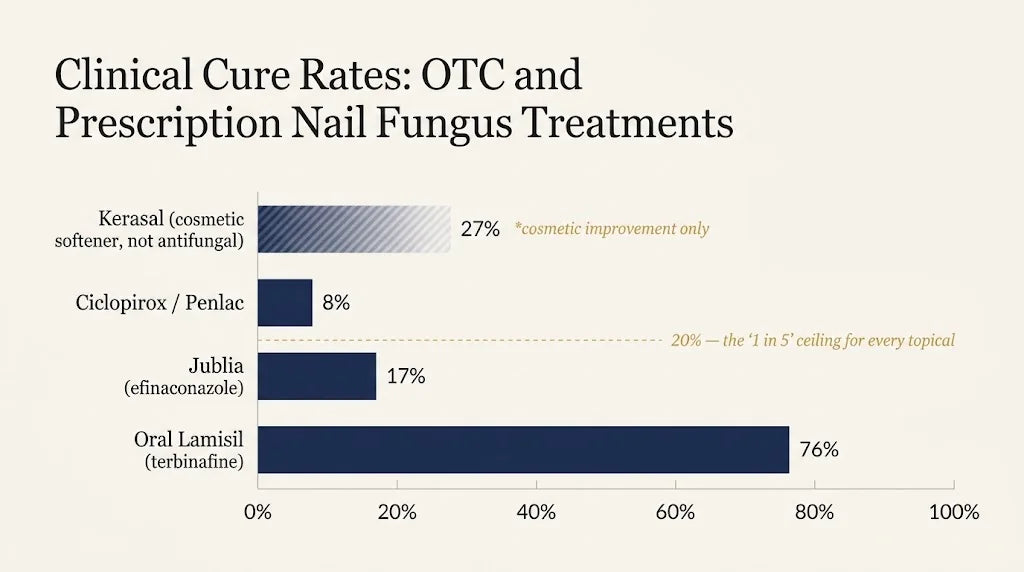
The harder question — the one almost nobody answers correctly — is why the standard creams, pens, and drugstore products keep failing.
For 30 years I told patients the same thing your doctor probably told you: that some cases were just "stubborn." I was wrong about why.
The honest answer comes from a holistic skin and nail specialist named Dr. Alan Meyers — the developer behind a pen-format treatment called Orivelle, currently used by over 200,000 verified customers.
Here's what Dr. Meyers wrote about why standard treatments fail:
— Dr. Alan Meyers, formulator (Orivelle product page)Most over-the-counter treatments only scratch the surface — and in many cases they dry out and weaken the skin barrier, making it easier for fungus to come back.
That single sentence explains a paradox patients have been describing for years: the cream "works" for two weeks, the nail looks better, then it stops — or worse, the fungus comes back stronger after they stop using it.
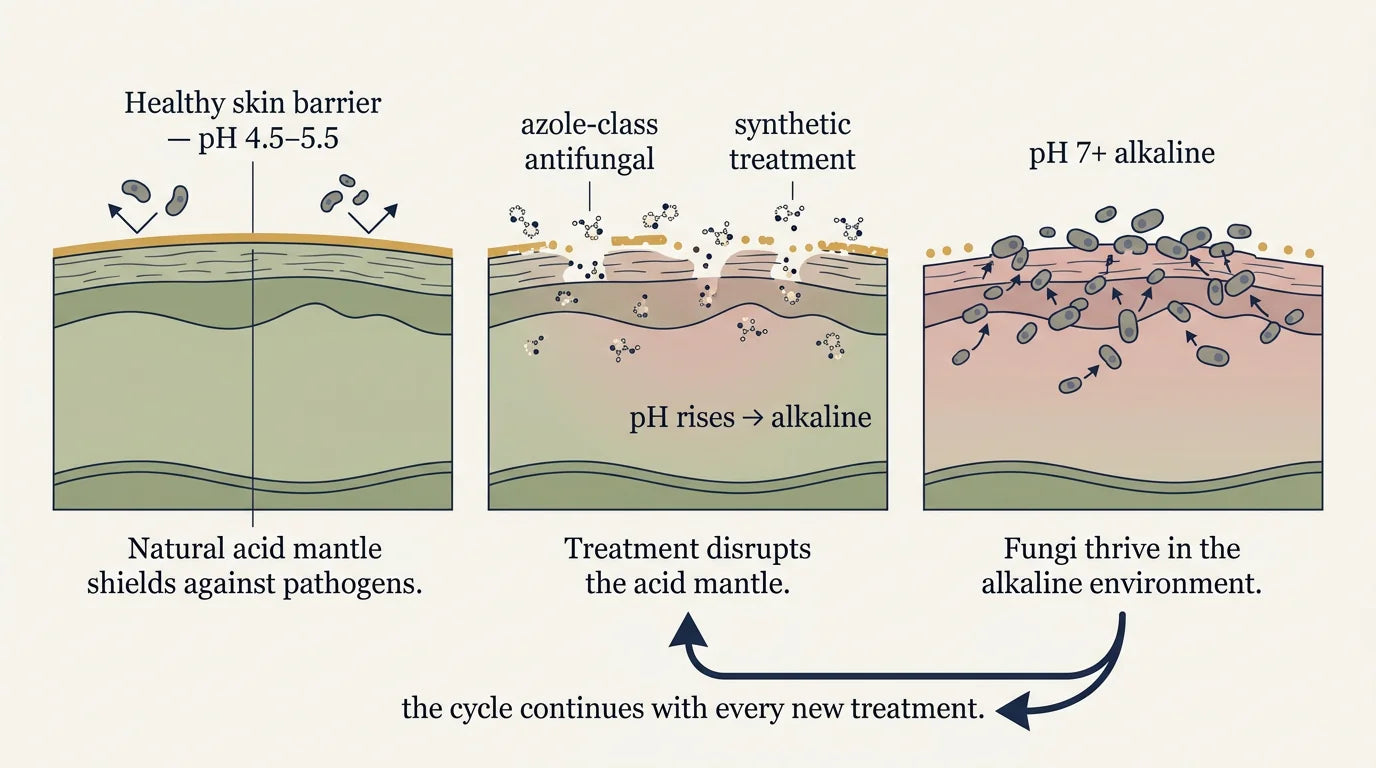
The reason is the skin barrier itself. Harsh synthetic antifungals strip the skin's natural acid mantle (pH 4.5–5.5). Once that mantle is gone, the skin actually becomes more hospitable to fungal recolonization. The treatment creates the conditions for the fungus to return.
That's the one reason most treatments don't just fail — they make the next infection harder to clear than the one before it. Every cycle of "try a cream, see partial improvement, watch the fungus come back" leaves the skin more vulnerable than the cycle before. After three or four rounds of this, patients walk into my office convinced their case is "stubborn." It isn't. The treatments were stripping the only defense the skin had.
Orivelle's 17-ingredient natural formula was designed around the opposite approach — plant-based compounds (tea tree oil, vitamin C, peppermint, jojoba, evening primrose, rosehip, and 11 more) that fight the fungus while supporting the skin barrier instead of stripping it. The pen-format precision applicator coats every part of the nail and surrounding skin without the mess of drops or creams.
The reported numbers from Orivelle's own user study: 84% noted noticeable improvement in nail clarity and strength after consistent use. Many report first visible improvements within 5–7 days. Full restoration of the natural nail appearance takes longer — toenails grow about 1mm per month — but the color and texture changes start fast.

What to do next
If you suspect fungus rather than trauma, polish, or aging, here's what consistent use looks like.
Apply twice daily
Morning and night, on clean dry feet. Twist the pen, brush a thin layer onto the affected nail and surrounding skin, let it absorb. No rinse.
First visible improvements
Typically show within 5–7 days for most users. The yellow color fades first, then thickness and texture.
Skip nail polish or acrylics
During treatment so the formula can fully absorb.
Address the source
Damp shoes, shared pedicure tools, or an athlete's-foot infection that migrated to the nail.
If you've tried three or more antifungal products without visible results, and you've ruled out the four non-fungus causes above, Orivelle is the yellow toenail remedy I'd consider next — a 17-ingredient natural formula designed to fight fungus and support the skin barrier instead of stripping it.
Current pricing on Orivelle's official site:
1 pen
$19.99
3 pens (2 + 1 free)
$13.99 each · $41.97 total
6 pens (3 + 3 free)
$9.99 each · $59.94 total
For most patients I see who've already tried multiple OTC products, I'd suggest the 6-pack — the per-pen price drops to $9.99 and you have enough to use consistently for the duration it takes for the natural nail to grow out underneath.
30-day money-back guarantee · Free shipping · 200,000+ verified customers · 4.9-star rating across 5,731+ reviews · 84% reported success rate